
Our weekly roundup of news from East Asia curates the trade’s most vital developments.
Huawei strikes to trademark its NFTs
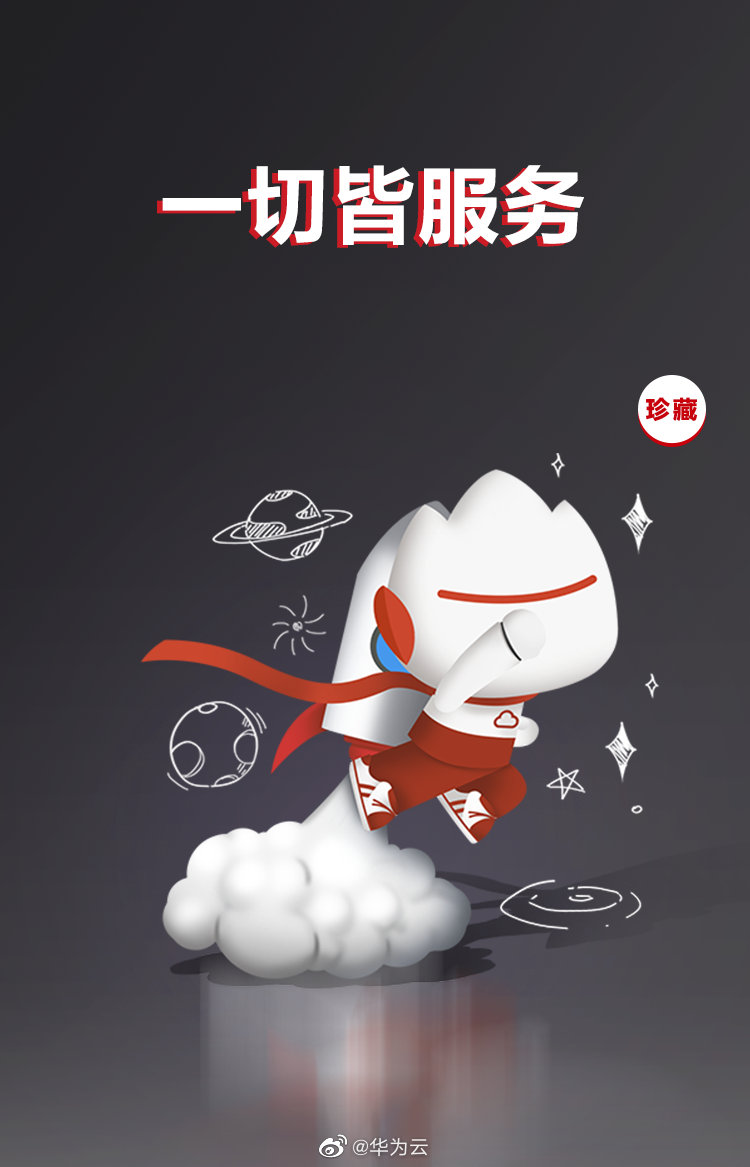
According to a Jan. 28 report by Sina News, Chinese telecom big Huawei has just lately filed for eight emblems associated to its Huawei “YunYunBao” nonfungible tokens (NFT) collection. The emblems embody digital collectibles within the scientific devices, furnishings, schooling, jewellery, promoting and telecom sectors. Last April, Huawei unveiled its YunYunBao NFTs, that includes characters impressed by its namesake cloud service. Huawei NFTs are minted on its proprietary Huawei Petal Chain, which the telecom big says has over 1,000 nodes and may deal with over 50,000 transactions per second.
Toyota sponsors blockchain hackathon
In a Feb. 1 Medium put up, Sota Watanabe, the founding father of Japanese blockchain Astar Network, introduced that Astar had obtained a sponsorship from Japanese vehicle producer Toyota for its newest Web3 hackathon. Astar is at present a parachain constructed on the Polkadot blockchain.
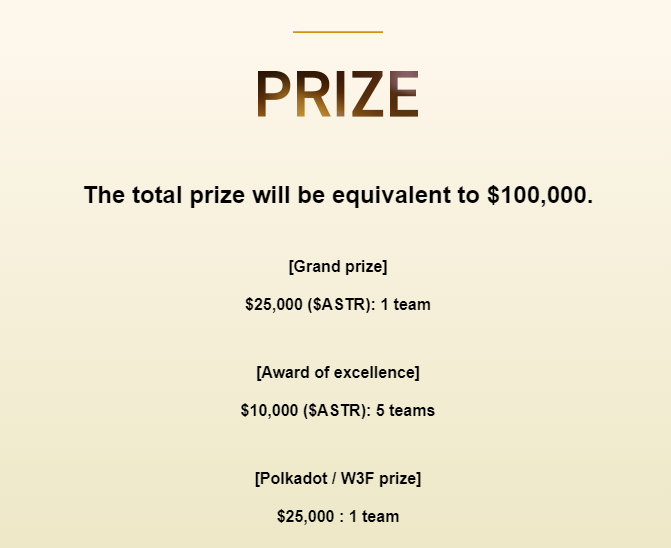
According to Watanabe, over $100,000 in prizes will likely be distributed to tasks that develop “intra-company DAO [Decentralized Autonomous Organization] support tools for this hackathon which Toyota employees may actually use in the future.” The hackathon will run from Feb. 14 to March 25.
“Needless to say, Toyota is the largest company in Japan and one of the world’s leading international companies,” Watanabe wrote. “We are very excited to be hosting the Web3 Hackathon on Astar with Toyota. During the event, we aim to develop the first PoC DAO tool for Toyota’s employees. If a good tool is produced, Toyota employees will interact daily with products on Astar Network.”
North Korea devastates crypto
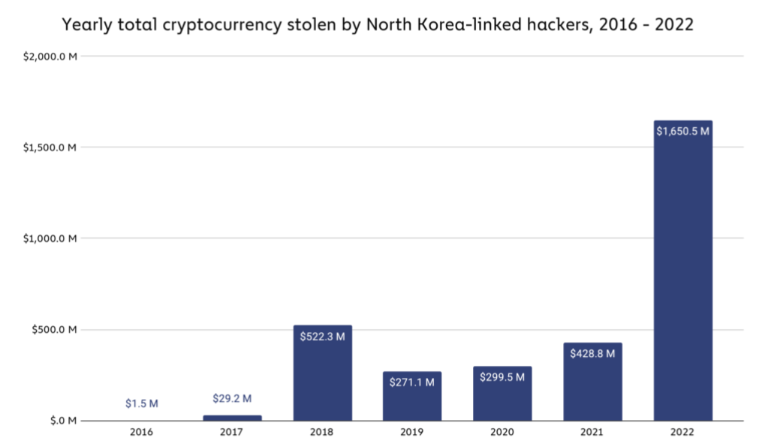
On Feb. 2, blockchain forensic analytics agency Chainalysis revealed that North Korean hackers stole an estimated $1.65 billion out of the $3.8 billion funds siphoned from decentralized finance (DeFi) protocols in 2022. For context, North Korean-related entities solely stole $299.5 million in 2020 and $428.8 million in 2021. The agency additionally warned that regardless of the United States Treasury Department imposing sanctions on cryptocurrency mixer Tornado Cash on Aug. 8, North Korean hackers have more and more turned to different digital asset mixers, similar to Sinbad, to launder stolen funds. Chainalysis mentioned:
“North Korea-linked hackers tend to send much of what they steal to other DeFi protocols, not because these protocols are effective for money laundering — they’re actually quite bad for money laundering given their increased transparency compared to centralized services — but rather because DeFi hacks often result in cybercriminals acquiring large quantities of illiquid tokens that aren’t listed at centralized exchanges. The hackers therefore must turn to other DeFi protocols, usually DEXes, to swap for more liquid assets.”
On Jan. 29, decentralized finance analyst Zachxbt claimed he had traced one other 17,278 Ether (ETH) — value round $27.18 million — laundered by North Korean hackers within the aftermath of the $100 million Harmony Bridge hack final June. According to Zachxbt, the funds had been then moved to 14 pockets addresses unfold throughout 4 exchanges. On Jan. 24, the U.S. Federal Bureau of Investigation confirmed that North Korea’s Lazarus Group was the mastermind behind the assault.
No Binance metaverse for now
In an ask-me-anything session on Jan. 14, Changpeng Zhao, CEO of cryptocurrency change Binance, mentioned that the agency “is more open to just investing in other virtual reality or metaverse games,” because the agency isn’t a game-builder and doesn’t have a recreation constructing staff.
“Nobody really knows what metaverse means. Everybody has a different concept of it,” the crypto government mentioned, in line with a transcript revealed on Jan. 27.
Read additionally
Features
The Invisible Man of the Visible World: How Blockchain Could Offer New Hope to Stateless Rohingya
Features
E For Estonia: How Digital Natives are Creating the Blueprint for a Blockchain Nation
Instead, Zhao says that Binance will focus its “next big product” on releasing a number of proofs-of-reserves and proofs-of-solvencies to extend its transparency. The change has set a purpose of 1 billion customers passing Know Your Customer verification for the brand new 12 months.
Huobi denies knowledge sharing allegations
Digital asset entrepreneur Justin Sun has responded to allegations that his change Huobi supplied consumer info to Chinese tax authorities. The TRON founder tweeted that Huobi “doesn’t share any client information to tax authorities unless it follows international judicial assistance procedure.”
Previously, Sun praised the introduction of a brand new 20% Chinese cryptocurrency earnings tax as “a clear indication that the Chinese government views cryptocurrencies as a legitimate form of wealth and wants to ensure its proper taxation.”
Although based mostly within the Seychelles, Huobi has a large variety of workers working in mainland China, who reportedly revolted towards the agency’s stringent new labor insurance policies early this month.
Huobi founder’s new ventures
After promoting his total stake in Huobi to Sun’s About Capital final October, Chinese businessman Lin Li has devoted his time to managing Hong Kong blockchain funding holdings agency New Huo Technology. On Jan. 30, New Huo launched a staking technical assist service, dubbed “Sinohope Staking,” that may first serve the Cosmos group earlier than increasing into Ethereum, EOS and ChainLinok.
According to builders, Sinohope Staking will present “multi-node deployment, real-time monitoring of node operation process, 7*24h online support, 3-layer wallet structure and multiple signature technologies” for customers considering staking their property on public blockchains. New Huo says it is going to assist purchasers arrange their stake nodes and monitor their operations “without handling or holding any clients’ assets,” and claims purchasers will retain “100%” of their staked cryptocurrencies throughout the course of.
Bitzlato allegedly defiant regardless of sanctions
The co-founder of Hong Kong-based cryptocurrency change Bitzlato says the platform will reopen after being shut down by United States authorities final month.
In a Jan. 31 YouTube interview, Russian nationwide Anton Shurenko mentioned that the change would open later at an unspecified time and claimed as much as 50% of funds held in seized scorching wallets could be obtainable for withdrawal at the moment. In addition, the supposed founder claimed he had no concept why his firm was singled out.
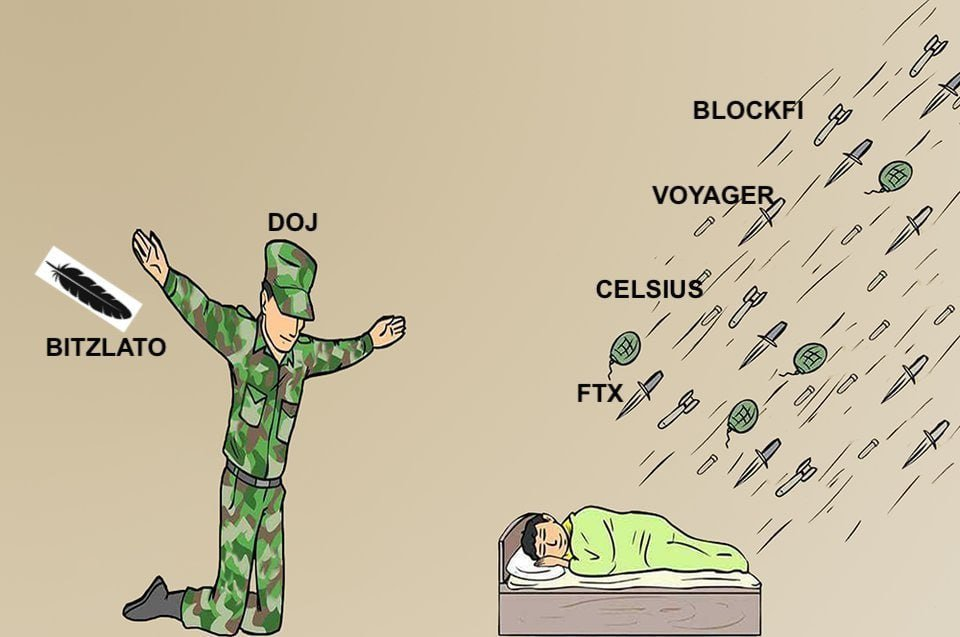
On Jan. 18, Bitzlato was shut down after an investigation by regulation enforcement officers, together with the U.S. Department of Justice, revealed that the change imposed lax Know Your Customer guidelines and allegedly laundered over $700 million value of illicit funds through crypto-fiat transactions. Shurenko’s fellow co-founder, Anatoly Legkodymov, was arrested in Miami across the identical day. After revelations that Binance was one of many high counterparties to Bitzlato, the change froze a lot of accounts associated to the entity.
According to latest stories, Spanish police have detained three executives from the agency, particularly the CEO, a gross sales government and the advertising and marketing director.
Subscribe
The most participating reads in blockchain. Delivered as soon as a
week.

Content Source: cointelegraph.com